Anne Carson: A Game Changer in Contemporary Literature
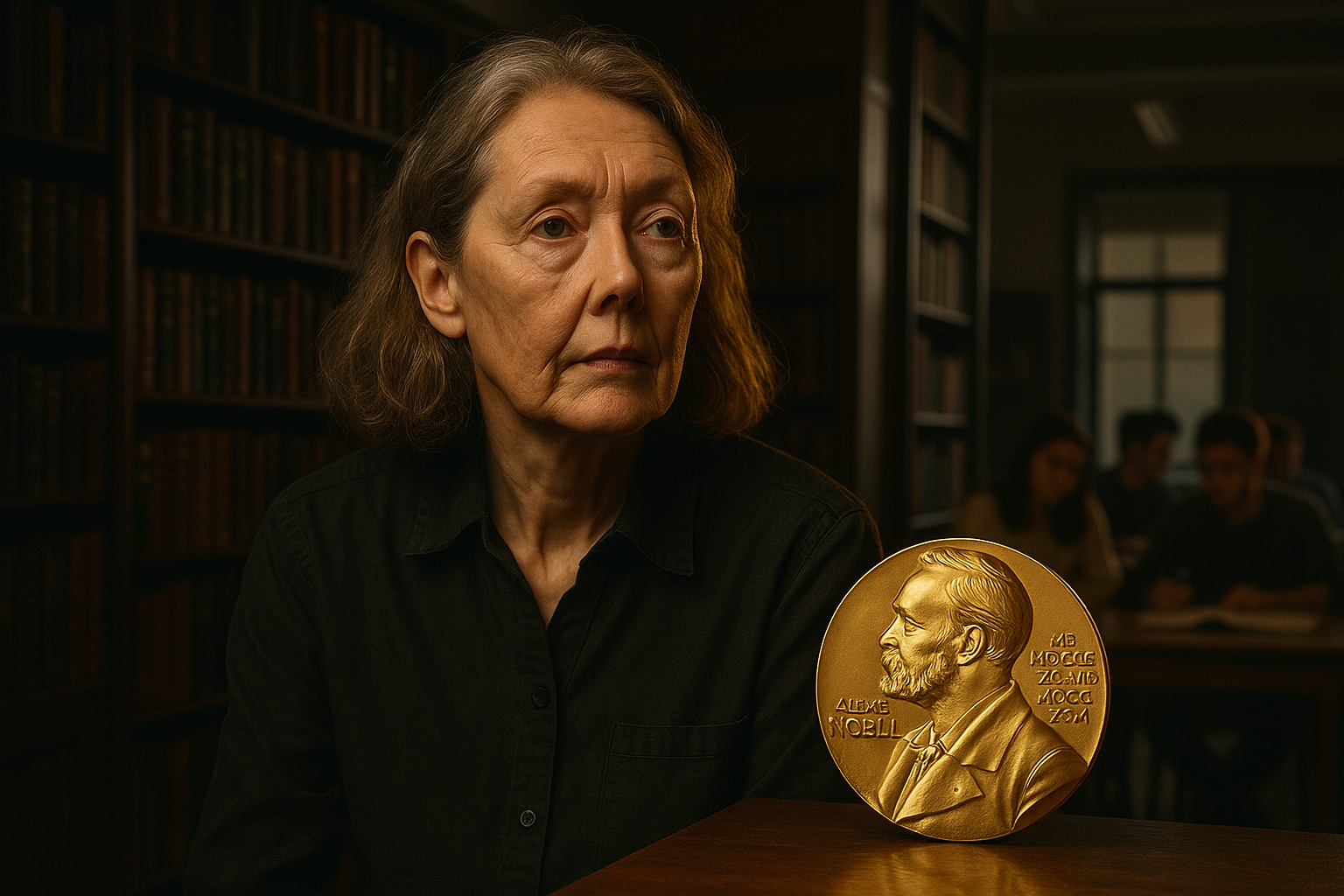
On October 8, 2026, the Swedish Academy awarded the Nobel Prize in Literature to Canadian poet and translator Anne Carson, recognizing her "bold and inventive oeuvre." This prestigious accolade highlights Carson's unique ability to engage with classical traditions, producing fresh and innovative forms that resonate with contemporary audiences. With this award, Carson solidifies her place as the third Canadian laureate, joining the ranks of notable figures like Saul Bellow and Alice Munro.
Celebrating Carson's Contributions
Carson is perhaps best known for her groundbreaking work, Autobiography of Red, a novel in verse that reinvents the ancient myth of Geryon. Her sequel, Red Doc>, continues this exploration of myth and identity. Beyond her narrative innovations, Carson's talents extend to translating ancient Greek texts and writing opera libretti, in addition to her literary criticisms. Her ability to fluidly navigate across genres establishes her as a rich subject for analysis in both academic circles and the classroom.
The uniqueness of Carson's work offers educators a valuable resource for engaging students in critical discussions. By examining her texts, students can explore the dynamics of rewriting classical mythology, the implications of the verse-novel form, and the broader concept of translation as an act of creativity in its own right.
Teaching Opportunities for English Classrooms
For English teachers, the awarding of the Nobel Prize to Carson provides a compelling opportunity to spark interest in literature. Short excerpts from her work may serve as a catalyst for exploring how contemporary authors reinterpret classical myths, thereby enhancing students' appreciation for literary evolution. At advanced levels (B2 to C1), educators can encourage students to compare original classical sources with Carson's modern retellings, fostering discussions on what changes occur and the reasons behind them.
Furthermore, this recognition serves as a timely reminder for candidates preparing for oposiciones (competitive exams) to integrate current events into their literature syllabi. References to recent prize winners, such as Carson, can elevate discussions on contemporary poetry, intertextuality, and literature in translation, thereby enriching examination responses and classroom dialogues.
The Nobel Prize awarded to Anne Carson not only acknowledges her literary achievements but also invites educators and students alike to delve into the creative intersections of language, myth, and form. It's an exciting moment for literature enthusiasts that reinforces the ever-evolving nature of storytelling in modern times.