AI and Education: Will It Replace Teachers or Transform Teaching?
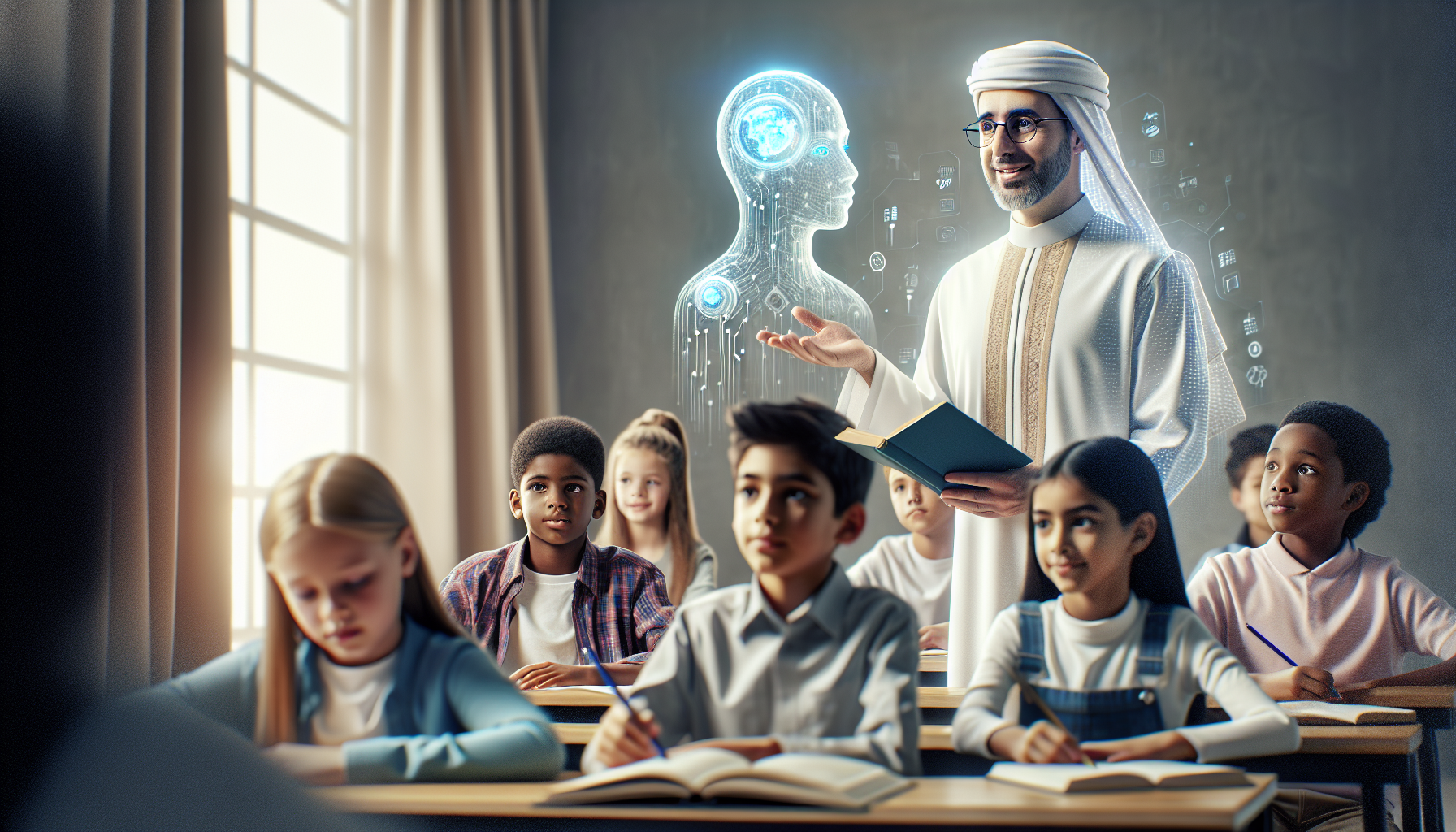
Artificial intelligence has revolutionized the educational landscape at an unprecedented pace. What was once merely a tool for curiosity has quickly transitioned into a practical resource for both educators and learners. With capabilities spanning from lesson planning to feedback provision, the pressing question arises: will AI ultimately replace teachers?
The consensus among many experts suggests that while AI is unlikely to displace effective teachers, it may illuminate the limitations of traditional teaching models. Steve Kaufmann’s article emphasizes that it's not the teachers who might vanish but rather the rigid, linear structure of formal education that AI intends to challenge.
The Problem May Not Be the Teacher, but the Model
Most conventional educational systems follow a step-by-step format. Students grasp one concept, undergo testing, and then progress to the next. Kaufmann refers to this as a “ladder” model—fixed, sequential, and centered around mastery at each interval. Conversely, he promotes a more exploratory learning approach, especially in language education, where concepts are revisited in diverse contexts, fostering a gradual understanding rather than a linear one.
This distinction is crucial as AI can facilitate two distinct learning pathways. The first offers superficial improvements—quicker quizzes and automated routines. The second embodies profound transformation, enabling AI to generate various content versions, allowing learners to tackle topics from multiple perspectives and difficulties. Kaufmann advocates for pursuing this latter, richer educational possibility.
AI as a Tool for Flexible Learning
A prominent idea within Kaufmann’s article suggests that AI could significantly enhance non-linear learning. Rather than presenting identical content to all students, AI can provide simplified summaries, audio explanations, advanced readings, or video interpretations. This flexibility allows students to access learning in differing forms, accommodating various preferences and understanding levels.
Particularly in language education, where progress can be non-sequential, AI becomes invaluable. Some students grasp topics better after engaging with simplified material; others may need to revisit concepts multiple times. By integrating AI, teachers can offer such variety while managing their workloads effectively.
When optimally utilized, AI does not eliminate the teacher’s role; instead, it enhances teachers' adaptability, supporting personalized learning and addressing individual classroom dynamics.
What Good Teachers Still Do Better
If education solely revolved around knowledge transmission, AI might indeed pose a significant threat. However, genuine teaching transcends mere content delivery. Effective educators grasp classroom dynamics, detect confusion, and motivate students. They establish crucial trust—an essential element that fosters meaningful learning experiences.
Kaufmann underlines that effective teachers who curate authentic learning experiences and cater to individual learners cannot be easily replaced. In contrast, those whose roles lack depth, limited to information dissemination, are more susceptible to replacement by AI.
Assessment Needs Rethinking Too
Kaufmann also addresses the necessity of re-evaluating assessment. He critiques traditional short quizzes and multiple-choice formats as inadequate measures of genuine understanding. He proposes “regenerative testing,” where learners reconstruct and articulate their knowledge, thereby providing deeper insights into their grasp of topics.
This concept resonates with seasoned educators, who suspect that students often perform well on basic tests without fully comprehending the subject matter. AI can enrich assessment methods by fostering more profound verbal or written responses, though the teacher’s oversight remains vital for sound judgment and interpretation.
The Risk: Easy Shortcuts Instead of Real Learning
While the article doesn't overlook the potential shortcomings of AI, it highlights essential considerations. The risk lies not in AI’s capabilities but in reliance on easy paths that may undermine substantive learning. The focus should remain on leveraging AI to enhance education, while acknowledging the irreplaceable qualities of dedicated teachers who cultivate genuine connections with their students.